
Banks have raised concerns over the new international trade settlement in rupee, fearing that facilitation of such a mechanism could result in them facing the ire of economic sanctions by the West, people aware of the matter said. Large banks with overseas operations have sought clarity and assurance from the Reserve Bank of India (RBI) that they will not be targeted with sanctions for facilitating rupee trade with a sanction-hit country such as Russia. The present payment mechanism is a shift from earlier such arrangements, like the one with sanction-hit Iran, which involved banks facilitating settlement of international trade that did not have business in the sanctioned nation.

India's exports recorded a flat growth of 0.59 per cent to $31.99 billion in November, even as trade deficit widened to $23.89 billion during the month, according to the data released by the government on Thursday. Exports stood at $31.8 billion in November last year. Imports rose by 5.37 per cent to $55.88 billion in November as compared to $53.03 billion in the corresponding month a year ago, the data showed. During April-November 2022, exports rose by 11 per cent to $295.26 billion as against $265.77 billion in the same month last year.

According to sources the proposal has been scuppered by the British commerce ministry, which was not consulted, and which is the sectoral ministry for trade and investment.

As the United States focuses on the Indo-Pacific, in particular the Quad, the Biden administration needs to address India's ties with Russia and its 'downward trend of democratic values and institutions', said a report by the Democratic Party of the Senate Foreign Affairs Committee.

'The finance ministry and the RBI will never admit to the difficulties in the economy because if they do so, it will adversely impact the financial markets, etc.' 'They like to present a rosy picture that everything is fine and under control.'
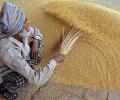
India has banned wheat exports with immediate effect as part of measures to control rising domestic prices, according to official notification. However, the export shipments for which irrevocable letters of credit (LoC) have been issued on or before the date of this notification will be allowed, the Directorate General of Foreign Trade (DGFT) said in a notification dated May 13. "The export policy of wheat ... is prohibited with immediate effect...," the DGFT said. It also clarified that wheat exports will be allowed on the basis of permission granted by the Government of India to other countries to meet their food security needs and based on the request of their governments.

When asked about a social media campaign to boycott Indian products in the wake of the row, the minister said he has not heard of any such thing.

India's exports rose by 22.36 per cent to $33.81 billion in February on account of healthy growth in sectors like engineering, petroleum and chemicals, even as the trade deficit widened to $21.19 billion, according to preliminary data released by the commerce ministry on Wednesday. Imports during the month too jumped by about 35 per cent to $55 billion, with inbound shipments of petroleum and crude oil surging 66.56 per cent to $15 billion. The trade deficit -- the difference between imports and exports -- stood at $13.12 billion in February 2021.

In its new avatar as the Department for Promotion of Industry and Internal Trade (DPIIT), it will directly be responsible for 'the welfare of traders and their employees'.

Foreign direct investments (FDI) into the country grew 19 per cent to $59.64 billion during 2020-21 on account of measures taken by the government on the fronts of policy reforms, investment facilitation and ease of doing business, the commerce and industry ministry said on Monday. Total FDI, including equity, re-invested earnings and capital, rose 10 per cent to the "highest ever" of $81.72 billion during 2020-21 as against $74.39 billion in 2019-20. "FDI equity inflow grew by 19 per cent in 2020-21 ($59.64 billion), compared to 2019-20 ($49.98 billion)," the ministry said in a statement. In terms of top investor countries, Singapore is at the top with 29 per cent share.

Former oil secretary Tarun Kapoor, present and former chairmen of ONGC and a former director of IOC, are among over a dozen people who have applied for the top job at the oil and gas regulator, PNGRB, sources said. Kapoor, who superannuated as Secretary to the Ministry of Petroleum and Natural Gas last month, is the most prominent name in the list of 13 persons who have applied to become the chairman of Petroleum and Natural Gas Regulatory Board (PNGRB). Oil and Natural Gas Corporation (ONGC) chairman and managing director Subhash Kumar and his predecessor Shashi Shanker are also in the race and so is G K Satish, who superannuated as Director for Planning and Business Development from Indian Oil Corporation (IOC) a couple of months back.

E-commerce companies have said they are well prepared and working closely with delivery partners to ensure smooth and safe delivery of packages in Maharashtra where the government has announced a slew of restrictions, including night curfews and weekend lockdown to control the spike in COVID-19 cases. However, there are concerns around the mandate for delivery staff to be either vaccinated or carry a negative RT-PCR report. According to the health ministry data, till 8 am on Tuesday Maharashtra's COVID-19 caseload was 452,777 with an addition of 20,881 from the previous day. In an order on Sunday, the Maharashtra government said all personnel belonging to home delivery services will have to be vaccinated and in case they are not vaccinated, they will have to carry a negative RT-PCR report.

The announcement of Murmu's candidature by BJP president J P Nadda came a day after she celebrated her 64th birthday.

"NSO is a private company, it is not a governmental project and therefore even if it is designated, it has nothing to do with the policies of the Israeli government," Israel's Foreign Minister, Yair Lapid, said at a joint press conference with Prime Minister Naftali Bennett and Finance Minister Avigdor Lieberman at the Prime Minister's Office on Saturday evening.

The expansion was the first by Sarma since he assumed chief ministership of the state about 13 months ago.

Last year in January at Amazon's flagship event Smbhav, Infosys Co-founder N R Narayana Murthy had to shorten his keynote speech from 20 minutes to about five because the event was delayed by 1.5 hours. "I will try to finish it in five minutes, because I am not used to delays," said Murthy, while addressing hundreds of micro, small and medium enterprises (MSMEs) about building businesses that last. In the audience was Amazon founder Jeff Bezos. Murthy referred to Bezos' prediction that the 21st century will be the Indian century. "That confidence enhances our enthusiasm," said Murthy. The relationship between Murthy and Bezos dates to 2014, when Prione, a 49:51 joint venture (JV) between Amazon and Murthy's venture capital company Catamaran, was formed.

The Union government will soon make amendments to the foreign trade policy (FTP) to enable exporters to claim export benefits for settling trade in rupees. These benefits are, so far, available for export payments received in foreign currencies. After the Reserve Bank of India (RBI) unveiled a mechanism to settle international trade transactions in the local currency on Monday, exporters have been demanding that the Ministry of Commerce and Industry come up with a clarification on the matter.

Bangladeshi Prime Minister Sheikh Hasina arrived in New Delhi on Monday on a four-day visit to hold talks with his Indian counterpart Narendra Modi following which the two sides are likely to ink pacts in key areas, including defence, trade and river water sharing.

Acting Foreign Minister of Afghanistan, Amir Khan Muttaqi, on Wednesday arrived in Islamabad, his first visit to the country, as part of efforts by the two sides to reset their ties in the wake of the Taliban's takeover of Kabul.

The wholesale price-based inflation surged to more than a decade high of 14.23 per cent in November, mainly due to hardening of prices of mineral oils, basic metals, crude petroleum and natural gas. WPI inflation has remained in double digits for eight consecutive months beginning April. Inflation in October this year was at 12.54 per cent, while in November 2020 it was at 2.29 per cent. "The high rate of inflation in November 2021, is primarily due to rise in prices of mineral oils, basic metals, crude petroleum & natural gas, chemicals and chemical products, food products etc as compared to the corresponding month of the previous year," the commerce and industry ministry said in a statement on Tuesday.

The wholesale price-based inflation eased to 10.66 per cent in September, helped by moderating food prices even as crude petroleum witnessed a spike. WPI inflation remained in double-digit for the sixth consecutive month. In August, it was 11.39 per cent. In September 2020, inflation was 1.32 per cent. "The high rate of inflation in September 2021 is primarily due to rise in prices of mineral oils, basic metals, non-food articles, food products, crude petroleum & natural gas, chemicals and chemical products etc. as compared the corresponding month of the previous year," the commerce and industry ministry said in a statement.

'The Israeli government is saying, "OK, leave northern Gaza, because we're going to fight Hamas there".' 'But Hamas is not stupid. They are going to put militants in southern Gaza too. And then what's Israel going to do?' 'At some point are they going to say, 'Leave southern Gaza too because we want to fight Hamas there? Go across the border to Egypt"'? 'That's what people are worried about. Because they fear that once they cross the border into Egypt there will be no coming back.'
The country's exports rose by 23.69 per cent to $34.06 billion in January on healthy performance by engineering, petroleum and gems and jewellery segments even as trade deficit widened to $17.94 billion during the month, according to provisional data of the commerce ministry. Imports in January grew by 23.74 per cent to $52.01 billion, the data, released on Tuesday, showed. Trade deficit widened to $17.94 billion during the month as against $14.49 billion in the same month last year.

Among other things, the e-commerce players will have to display the total 'price' of goods and services offered for sale, mention the 'expiry date' of goods and the 'country of origin' of goods and services.

The government can argue the change targets only those residing abroad but the fact remains that it does affect the kin and friends in India of non-residents.

Falling private sector investment and farm distress are problems that call for immediate attention, says T N C Rajagopalan.

"Commerce ministry pushes for all these things. There is no proposal to devalue," a top finance ministry official said. "Exporters would have come to the commerce ministry with this issue. However, there is nothing to discuss from our side."

Not displaying the mandatory information, including country of origin, on products sold on their platforms in India, draws government's attention.

The rupee on Tuesday recovered from its all-time intra day low of 77.79 to close higher by 7 paise on a stellar rally in domestic stock markets. After opening lower at 77.67, the local unit plunged further to its all-time intra-day low of 77.79 due to a spike in crude oil prices and disappointing macroeconomic data. However, a strong rally in domestic equities helped the rupee rebound and close at 77.48 (provisional), showing net gains of 7 paise over the last close of 77.55. The forex market was closed on Monday on account of Buddha Purnima.

The country's exports declined marginally by 0.8 per cent to $26.89 billion in December 2020, due to contraction in sectors like petroleum, leather and marine products, according to preliminary data released by the commerce ministry on Saturday. The trade deficit in December widened to $15.71 billion, as imports grew by 7.6 per cent to $42.6 billion, the data showed. Export in December 2019 was $27.11 billion, while imports stood at $39.5 billion.

However, in recent times, the clout that trader bodies such as CAIT and other organisations like Swadeshi Jagran Manch and Laghu Udyog Bharati has is steadily increasing. Earlier this year, trader bodies were able to convince the government not to extend the deadline for implementation of the new norms in FDI policy on e-commerce.

The war in Ukraine has made its presence felt at the World Economic Forum's annual meeting in Davos. As political and business leaders' debate, they remain fearful of Europe's economic future. There is a sense of gloom among many business leaders as energy shortage and economic recession rear their heads. Global investors are keenly assessing the presence of Indian delegation at Davos.

The ministry of home affairs has recommended a ban on 54 Chinese mobile applications that pose a threat to the country's security, officials sources said on Monday.

India's exports may have touched an all-time high of $422 billion in 2021-22 but recession in key western markets and geo-political crisis due to the Russia-Ukraine war are expected to impact the growth of the country's outbound shipments in 2023. All the global trade promoting factors like political stability, movement of goods, adequate availability of containers and shipping lines, demand, stable currency and smooth banking systems are in disarray. Adding to the woes, COVID cases have again started rising in countries like China, Japan, South Korea and the US.

West Bengal's industry minister Partha Chatterjee, arrested in the SSC scam, should be removed immediately from his post and expelled from the Trinamool Congress, the party's state general secretary Kunal Ghosh demanded on Thursday.

Ashok Kumar Gupta, chairman of the Competition Commission of India (CCI), has never minced words while talking about the giant technology companies, referring to them on multiple occasions as "centres for entrenched and unchecked dominance". The anti-trust regulator has, in fact, been cracking down on big technology companies such as Google, Apple, Facebook, and others, after they were hauled up by regulators and lawmakers in Europe and Australia. However, in several instances, existing regulations have prevented the CCI from going all out against these companies for anti-competitive activities.

India imported goods worth $4.23 billion in June from sanctions-hit Russia, up 6.8 times as compared to last year, as demand for shipments of crude oil grew at the fastest pace during the month. Crude oil worth $3.02 billion was imported in June, which translates into a share of 71 per cent of the total imports from Russia, commerce and industry ministry data showed. Similarly, during the April-June quarter, India's imports from Russia were valued at $9.27 billion, up 369 per cent on year.

The new mantra was to align Apple's ambition with the government's, focusing on Modi's favourite themes of Make in India, employment generation and India as a high-tech export hub.

Over 1.4 lakh jobs are estimated to be created between March 2019 and March 2021 in various central government departments, according to the Union Budget presented on Monday. The strength of government establishments was 32,71,113 as on March 1, 2019, which is estimated to increase to 34,14,226 by the first day of next month - an increase of 1,43,113, it said. The budget documents have given a break-up of the jobs estimated to be created in central government departments between 2019 and March 2021.

Samridhi Bhardwaj analyses the dynamics of duty-free liquor allowance in India.
